Thursday, January 17, 2013

Les Misérables: La Moralé de la Révolution

http://500daysasunder.files.wordpress.com/2012/05/screen-shot-2012-05-30-at-12-14-05-pm.png

     How can one describe something so magnificent, when one's own words do not deserve to? A movement of morality, a powerful revelation of injustice, reality at its crispest, climatic edge: Les Misérables was all this and so much more. It denounced the monarchy, and pushed the stereotypical envelope through a heart-clutching tragedy. One of the greatest works of French Literature of all time, Hugo created characters who breathed and died, people of sin, corruption, and redemption. Such brutal honesty caused the French populace to erupt in resentment, acknowledgement, and even an appetite yearning for revolution . The sparks of this "red, black" war, as with any other, were the daring remarks of those individuals who saw such injustice, and declared the revelation to all who would listen. Their lives were discounted to the cause they believed in, and justice became the only thing of value, worth life and death combined. Yet, the advance came from a conscientiousness, a morality too powerful to selfishly disregard. As a whole, Les Misérables was a theme of this morality: in social classes, in life, and in the worth of the people's final voice.

http://ellenandjim.files.wordpress.com/2012/12/anne-hathaway-les-miserables-fantineblog.jpg?w=500

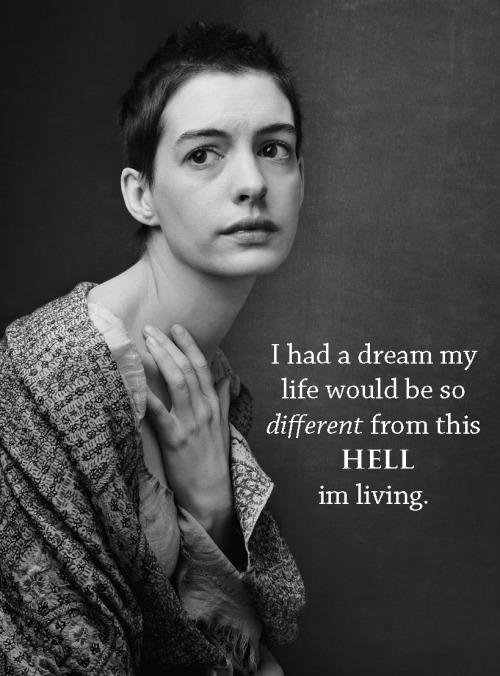
     Consider the perspective of the classes. Fantine was thrown into poverty in quite a literal sense, forced to become a corrupt woman at the lowest possible point so as to provide for her child. Although immoral, the desperate desire for her daughter's well-being overcame the injustice and evils poverty used to plague the her. Tragically told, her tale impressed itself upon the mind of Jean Valjean, a redeemed thief. Of the middle class, he raised the young Cosette in such a situation. As a result, she was ignorant to the battle behind the floral curtains, a bloody revolution. Men such as Javert, however, who was raised in a jail, working his way up, believed that even the poor could morally earn their way, and those who could not were flawed. Debts had to be paid forever in his mind. Those of the university, including the young Marius and his cronies, were from different backgrounds, gathered together to be the voice for a majoring populace too deep in their suffering to defend themselves. Each perspective lead to different morale beliefs, their actions reflecting such.

http://i.dailymail.co.uk/i/pix/2013/01/11/article-2260526-16D438D3000005DC-695_634x424.jpg

     All too often, the lines between right and wrong are gray, never clear to an individual because of how he sees it. The vision of man is always jaded with selfishness, eternally flawed. Empathy is the only thing that can create clear sight, and as it is unusual for those raised in luxury to imagine a different life, rarely does it occur. Tragedy, emotion, and passion as strongly pronounced as in Hugo's work opened the eyes of even the blindest wealthy. It angered some, but proved to others how desperate such a suffering was. No human should have had to live with nothing, while others basked in everything. The monarchy, the dictatorship, and the government as a whole rejected the voice of such people, until gunfire joined their cries.

http://i.dailymail.co.uk/i/pix/2012/12/07/article-2244034-16668916000005DC-152_634x415.jpg

      It is quite simple, even now, to declare that the few who stood alone during the rebellion were fools to do so. Bludgeoned, slaughtered, and martyred, the blood of angry men coated the streets of Paris, but it reminded all with brutal impact of their death and their cause. Even Javert could not live with himself after realizing that the men who he captured and tortured in jail could have changed, if only they had been given a chance. Morality is belief, a truth, and yet an opinion. There will never be anything entirely right, and nothing wrong will be found without an impetus of some kind. As Hugo's characters struggled with its redeeming concept, the author himself evolved the story to become a real movement. Those who perished were not just foolish, because their force was legitimate and true. It was the justice in their belief that they came to represent in the end, making Les Misérables a representation of morality as one, with all its tones in shades of red, blue, and white.


"Do you hear the people sing? Singing a song of angry men? It is the music of a people who will not be slaves again! When the beating of your heart echoes the beating of the drums, there is a life about to start
when tomorrow comes!" Do You Hear the People Sing, "Les Mis
érables" 


Les Mis

"Castle On A Cloud"
There is a lady all in white,
Holds me and sings a lullaby,
She's nice to see and she's soft to touch,
She says "Cosette, I love you very much."
I know a place where no one's lost,
I know a place where no one cries,
Crying at all is not allowed,
Not in my castle on a cloud. 


Cosette (Isabelle Allen) sings this song and the emotion is impeccable. In the song, she describes where she wants to be and one line is "crying at all is not allowed", which is kind of ironic because Cosette lives a tragic life. I mean, how can she not cry with the position she's placed in? This song shows all kind of emotion for the audience and Cosette; the audience may feel epathy and pity for Cosette, and she's dreaming of this lavish lifestyle where she's actually loved. 

When Isabelle Allen sings this, she paints a picture and tells a painful story. The line "Cosette, I love you very much", is heartbreaking the way she whispers it as if it'll never happen to her. "Castle On A Cloud" is relevant to Les Miserables because it not only can relate to Cosette's life, but her mother, Fantine's as well. 

"I love you..Come here."
Fantine lived a dreadful and melancholy life, struggling to give everything, or so she thought, to Cosette.This song really stood out to me in Les Miserables because this young girl, Cosette, is living one of the worst lives imagined for just a child.  Fantine obviously can't provide for her, so she's just stuck with this rotten couple, the Thernardiers. In this song, she describes her happy place, which has happiness, laughter, and no crying at all. 

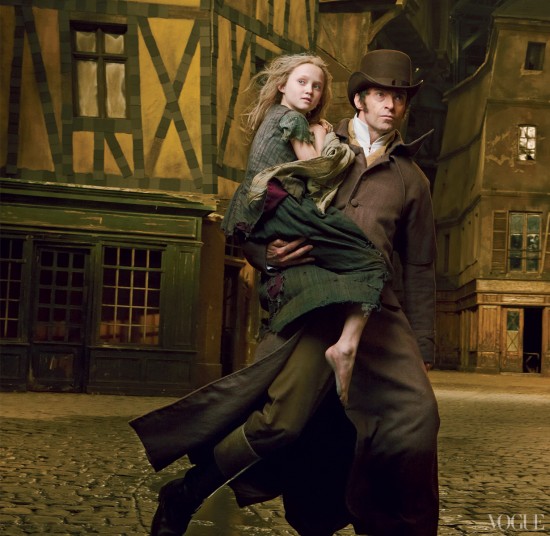
After singing this song, Madame Thernardier sends her out to the woods, where she meets Valjean who swoops her up and doesn't let her look back to her awful life. When Valjean takes Cosette and begins singing "Suddenly" in the car, Cosette is sleeping on his lap. It reminds me of how she said in the song she was dreaming of a place where someone loves her.


Le Tragique de Fantine

Le Tragique de Fantine
 

"And still I dream he'll come to me
That we'll live the years together
But there are dreams that cannot be
And there are storms we cannot weather
I had a dream my life would be
So different from this hell I'm living
So different now from what it seemed
Now life has killed the dream I dreamed"
 
In the beginning of Fantine's song she talked about men being so kind, and convincing. She talked about how love was blind, the world was a song, but then everything went wrong. To give a background of Fantine, she was in love with a man who she had a child with. Once Fantine had her baby her lover left, and never came back. Fantine worked in a factory to support her daughter who was living with adopted parents. Once people at the factory found out that she had a child with no husband they kicked her out. When Fantine was singing this song she had just become a prostitute to make money. The song portrays the double standard in this time. If a man was to loose his job he would be able to support himself no matter what. Women have three choices: work at a factory, get married, or be a prostitute.
As Fantine sang the song her emotions were sad, and desperate. I thought that Fantine's emotions about her life and how she felt came out very well in this song. In a way she may have still been living but inside she was already dead. She had to give her life up to provide for her daughter. My favorite lyrics in the song are the last eight lines. The reason I like those lyrics the best is because to me they have a deeper meaning then just my dream is dead. Fantine thought things were perfect when she had a man in her life, but she finally started to realize everything isnt what it seems. By the end of the song I could really see the pain, and the suffering she went through.


Le premier symptôme de l’amour vrai chez un jeune homme, c’est la timidité, chez une jeune fille, c’est la hardiesse.


<<Le premier symptôme de l’amour vrai chez un jeune homme, c’est la timidité, chez une jeune fille, c’est la hardiesse.>>

la timidité- timidness

la hardiesse-boldness


     Le véritable amour peut prendre différentes formes. Il peut se manifester à travers de nombreuses relations différentes. Une mère ou un père à sa fille, l'amour romantique pour une autre personne, ou non partagé l'amour tous nous amener à assumer de nouveaux rôles. Victor Hugo a montré ces nouveaux rôles, une femme gagne audace et une timide croissance l'homme, à travers Fantine et Jean Valjean. Fantine réalisé les difficultés seraient confrontés sans sa fille sans qu'elle devienne plus audacieux. Elle devient une prostituée et sacrifie sa dignitée pour le bien de sa fille à cause de son amour.  Comme Anne Hathaway a si bien dit, << "Fantine est un guerrier de l'amour, Elle est prête à tout sacrifier, son sens du bien et du mal, son apparence, sa vie même pour son enfant. >> Jean Valjean devient un homme aimable et doux à cause de son amour pour Cosette. Son l'amour paternel qui le rend plus timides et moins risqué. Leur amour pour Cosette brille à travers différentes manières, mais les deux sont ce qui est nécessaires pour Cosette.


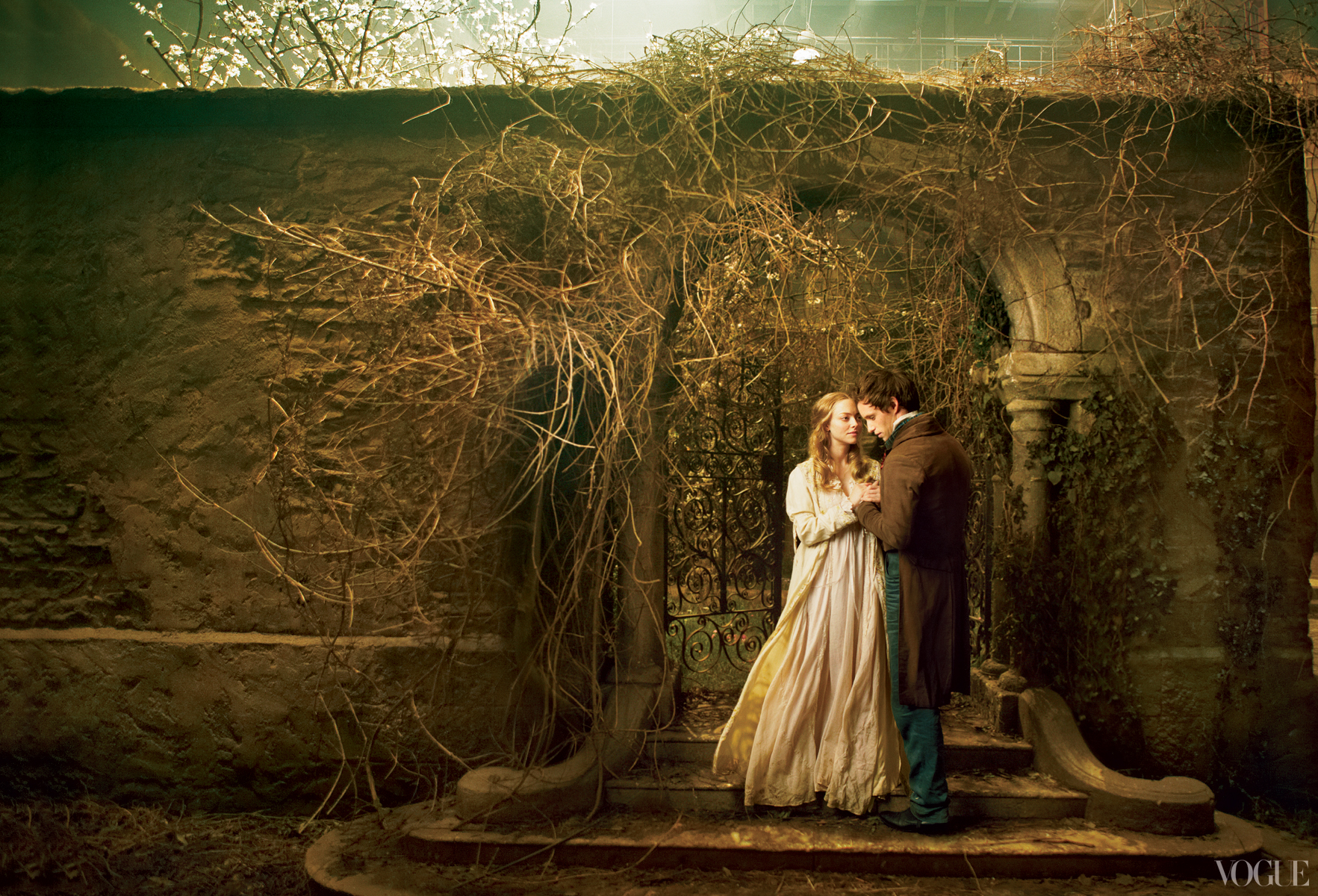
    Marius a un type différent de l'amour pour Cosette. Il aime Cosette avec tout son cœur et de raison, il devient la voix douce et timid.  Eponine, comme la citation dit, devient plus gras. Elle a risqué sa vie pour Marius et Marius aide et son amour. Son amour non partagé montre la tristesse qui peut venir avec l'amour vrai, mais elle croit que cela vaut la peine.

     La citation s'applique encore à la société d'aujourd'hui. Chaque fille veut le gars qui devient plus compatissant cause de l'amour et veut devenir la fille qui se bat pour son amour. Nos films préférés ont tous gars qui deviennent plus doux après avoir rencontré «l'un». Même dans le Titanic, Jack devient doux et Rose devient capable de tenir tête à sa mère. La société moderne s'efforce de réaliser ce que cette citation parle.

    I absolutely adore Les Misérables in every way.  It takes us to a place that makes us think more about people in the past and our own lives.  The love that the characters show for each other will always amaze me.  The character I found most interesting was Javert.  Javert's constant struggle between what is "fair" and what is "right".  Javert, tragically, is never able to find this balance.  The mere thought that the world could be different tears him apart and he realizes that the world is better off without his sense of justice.  I also really enjoyed the music.  I have always had a love for musical theatre but Les Mis stands out as one of the best.  It goes beyond reflecting the storyline, its words and melodies will mean something to anyone who listens, even those who have not seen the movie or play.  My favorite songs were Empty Chairs at Empty Tables and Do You Hear the People Sing.  Both of these stir so much emotion from within me.  Also, I really enjoy Master of the House, but for no deep reason, just that it is so much fun!  The movie tells many love stories but all of them seem to call to a higher purpose and show lessons that go beyond simple love.  In my opinion, it is one of the best stories and musicals of all time.

Bibliography:
http://rapidimg.org/server/files/50f0bdcb0eec9TgKOIn.jpg
http://www.vogue.com/magazine/article/dreaming-a-dream-cast-of-les-miserables/#
http://playingtoday.com/scene/les-mise-scnee.jpg
http://media.photobucket.com/image/recent/bluicyfire/evacuatewithstyle/ews20090130ep8-09.jpg
http://media.breathedreamgo.com/wp-content/uploads/2012/03/titanic-movie.jpg
http://www.davetieche.com/wp-content/uploads/2013/01/javert.jpg
http://www.youtube.com/watch?v=k6YwuqWFTbc
http://www.youtube.com/watch?v=2_F2_XrpGU8
http://www.youtube.com/watch?v=VvzLZIiD5TU
http://www.youtube.com/watch?v=Ohc8vrJWs3E
and of course... Les Misérables by Victor Hugo!

Etoiles dans la nuit

Stars-Inspector Javert


You know your place in the sky
 You hold your course and your aim
And each in your season
 Returns and returns
 And is always the same
 And if you fall as
 Lucifer fell You fall in flames!
 And so it must be
 And so it is written
 On the doorway to paradise
 That those who falter and those who fall
 Must pay the price!
Lord let me find him
That I may see him
Safe behind bars
 I will never rest
 Till then, this I swear
 This I swear by the stars!
 
 
In this song Javert is asking God to help him find the run away slave he has been searching for all of his life. He says he will never rest until he finds the "fugative" Jean Valjean. Javert is obessed with the law and believes strongly that whoever fails to follow the law will pay the price behind bars. He wants justice to be served on Jean Valjean and to find him. The fact that Javert is searching for JeanValgean, builds the story into what is it. Without Javerts presistant searching Jean Valgean would not have the hidden life with Cosette that he lives. His search for the fugative adds an aspect of suspense to the story. His emotions shown through this song are clear with the setting and words. He is on a rooftop by himself looking out over the city and asking God to help him find the man he longs to catch. He seems a bit frusterated that he cannot catch him but he is very sure of himself that justice willl be serves. He says many times in the song that if people fall, and comit crimes, they will pay the price. He does not plan to stop at any limit until the finds Jean Valjean. I think this song is beautiful and the way he expresses his need for the law and urge to find Jean Valjean. He expresses exactly how much he wants to find him and he swears by the stars that he will do so which is a poweful thing to say. I love when he says "this I swear by the stars" becasue it is such a  powerful note and so promising that he will go through with what he intends to do. I also like when he sings "you know your place in the sky, you hold your course and your aim" becasue it shows just how smart Jean Valjean is and how hard he is to catch. I think this line shows Javerts frusteration towards Valjeans constant running. He says right there that he knows his way in the dark and knows his way around the law.
 
 
Madison McElheney

Le Tragique Eponine


Le Tragique Eponine

     Eponine is the daughter of the Thenardiers and her brother is Gavroche. Cosette lives with her until age seven. As a child she is spoiled by her mother and ignored by her father. When she grows up she is very poor and her parents show no interest in her, unlike Cosette who becomes rich when she leaves with Jean Valjean. She falls in love with Marius, a revolutionary activist, but he never sees her as anything more than a friend. Marius instead falls for Cosette, and because of Eponine's great love for him she even acts as a messenger for the two. She even leads Marius to Cosette. Her support for Marius cause as a peasant makes Marius somewhat of a hypocrite for not returning her love and rather falling for middle class Cosette.


      When going to Marius to give him a note from Cosette, Eponine is shot and fatally wounded. Dying a brave death, her last words are without pity and she peacefully passes. She dies in Marius's arms confessing her love for him. Her end is tragic as she was a very likable character. She is strong willed, and is willing to do anything for Marius. She is smart but uses her deviousness never to hurt anyone.

     She also grows up to be very different from her parents who were crooks obsessed with money.  Due to her courageous and kind qualities her death is very sad. She is definitely a good character. She is what helps bring Cosette and Marius together and throughout the whole movie is just a very good friend to Marius. She dies a young brave death moving Marius to tears as well as her brother.
     It is interesting the way Eponine is still willing to help Marius with his relationship with Cosette. She  is never mean toward Cosette throughout the movie even though she is extremely jealous. She never acts in a mean way towards any other characters and therefore causes us to pity her for her misfortune. This includes her parents, poverty, and impossible love. She is one of the most tragic characters in Les Meserables.

Javert's Suicide: La lamentation d'un homme brisé


By the time he sings his final number, Javert is a broken man. He agonizes over the mercy he has received from Jean Valjean, unable to believe that the man he has always seen as a cold-blooded criminal would give mercy where he himself never would have.

 All it would take
Was a flick of his knife.
Vengeance was his
And he gave me back my life!


Up until this point, Javert's world has been completely black and white. The good, law abiding citizens against the evil, bloodthirsty criminals.  Jean Valjean's act of mercy and his desperation to save Marius, have completely disproved his idea of who a criminal is. Javert realizes that the system he's upheld so passionately for all of his life is deeply flawed.

And must I now begin to doubt,
Who never doubted all these years?

He realizes, deep down, that despite his crimes, Jean Valjean really doesn't deserve to rot in prison. That's when all Javert's unfeeling behavior comes back to haunt him, and when he realizes he's sent hundreds to prison who were perhaps not so different from Valjean. 

My heart is stone and still it trembles
The world I have known is lost in shadow.

                                             Philip Quast as Javert in 1995 for the 25th Anniversary Concert of Les Mis 
My favorite part of this song are  the final two stanzas, because they show a shell of a man who has had everything he believes in ripped apart. The audience finally sees a real person behind the cold mask of Javert.  

I am reaching, but I fall
And the stars are black and cold
As I stare into the void
Of a world that cannot hold

It's in these lines that you realize that Javert has always lived in a void. He's not the hero, but really, you can't truthfully call him a villain  He has spent his entire life filled with self-loathing, trying to repent for his shameful background by ensuring that justice is served and the law is upheld. He has had nothing but the mad pursuit of justice to live for. Now, he believes it all to have been futile. 

I'll escape now from the world
From the world of Jean Valjean.
There is nowhere I can turn
There is no way to go on....

When Javert finally lets himself fall into the Seine, he frees Jean Valjean. The chase that kept Valjean in constant fear, forced Cosette to have a lonely, rootless,  secretive life, and slowly drove Inspector Javert insane is finally over. 
This rendition of "Javert's Suicide" is performed by the original Javert, Terrence Mann in 1987. He received his first Tony nomination for the role and is "the real Javert" for many. I think his voice is perfect for Javert because it's so clear and powerful, almost militaristic. This makes it all the more startling of a contrast when his voice falters in the final moments of the song. Above all, I love how he continues the note up until the end, rather than give a melodramatic scream. It gives me chills every time I listen to it!

Terrence Mann onstage in 1987